Concept Art: More Than A Pretty Picture
Intro
Andrii Palianov spent years designing railway equipment as an Engineer – until the laws of physics started feeling like a limitation instead of a guide. Now, as a Concept Artist on our unannounced AAA project, he builds entire worlds instead.
For almost a decade, his path has taken him from cartoonish mobile game icons to cinematic concept art for names like Ubisoft, Disney, and Netflix – before he decided his heart was really in game dev all along.
Andrii breaks down what actually separates a Concept Artist from an Illustrator, why AI still can’t do his job, and what it really takes to land a seat at the AAA table.
JOURNEY & GROWTH
FROM BLUEPRINTS TO BLOCKOUTS
» Tell us about your journey to becoming a Concept Artist.
I’ve loved drawing since childhood, but I never actually planned to turn that passion into a career. I’m an engineer by education. After university, I worked at a research institute designing railway equipment. Eventually, I got tired of being restricted by the laws of physics and rigid technical specs. I wanted to create the impossible – entire worlds, even. So, I built a portfolio and started hunting for my first gig.
My first job was as a 2D artist working on cartoony mobile games. I mostly drew simple icons and, at best, some level assets. Over time, I started getting trusted with background illustrations. However, my real dream was to become a Concept Artist. I didn’t have the specific knowledge or the right portfolio at the time, so I spent my evenings and weekends taking courses, studying, and creating new pieces.
Eventually, it paid off, and I landed a Concept Artist role in video production. I worked on cinematics in collaboration with massive studios like Ubisoft, Disney, and Paramount, and even got to participate in pre-production for a Netflix project. But as time went on, I realized my heart was really in game dev, not just video and cinematics.
» What’s the difference between a Concept Artist and a 2D Artist/Illustrator?
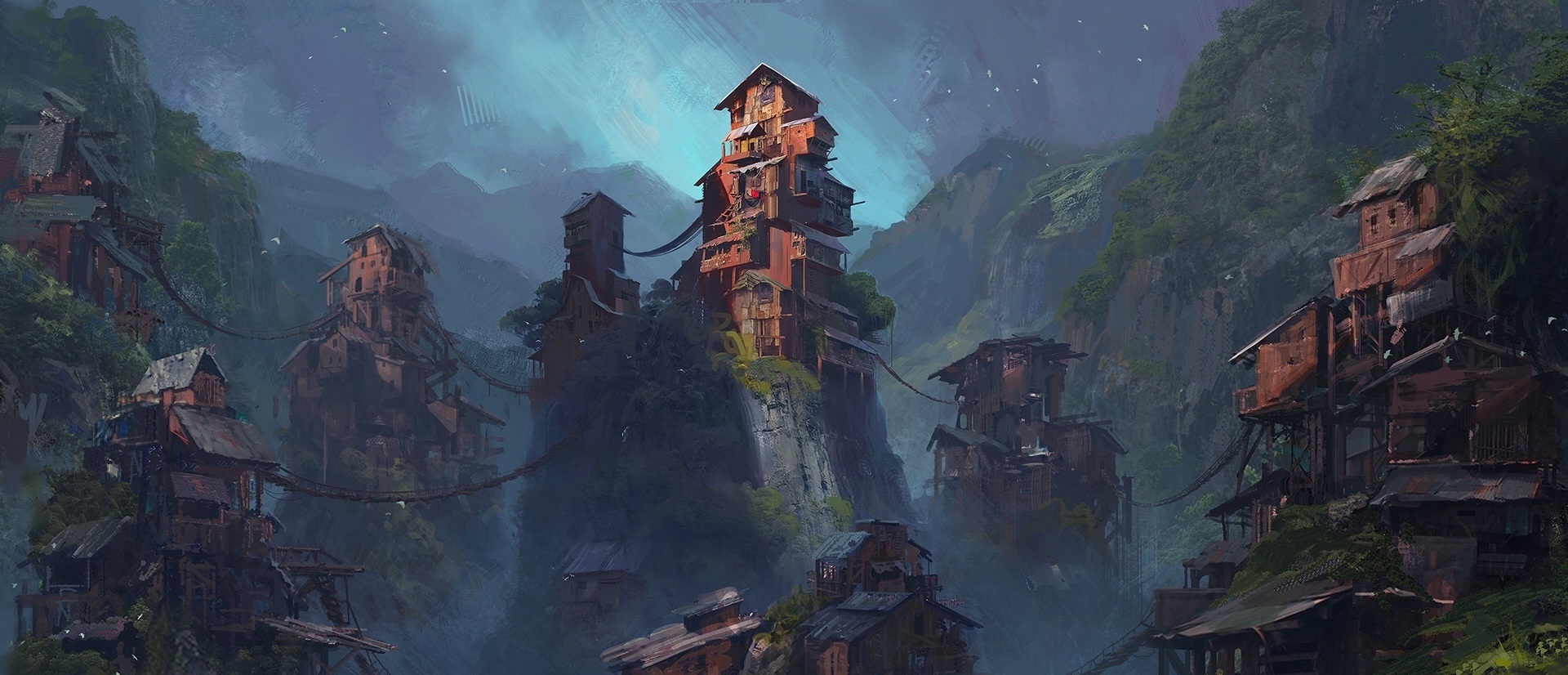
A 2D Artist/Illustrator creates the final image that players will actually see. But a Concept Artist? We’re the idea generators. Our art is essentially a blueprint for 3D modelers, VFX artists, level designers, and others to build upon. We don’t make the final asset, so we aren’t necessarily expected to deliver perfectly polished, hyper-detailed, or “beautiful” illustrations. We just figure out how things should look and work!
» How does working in game dev differ from video production?
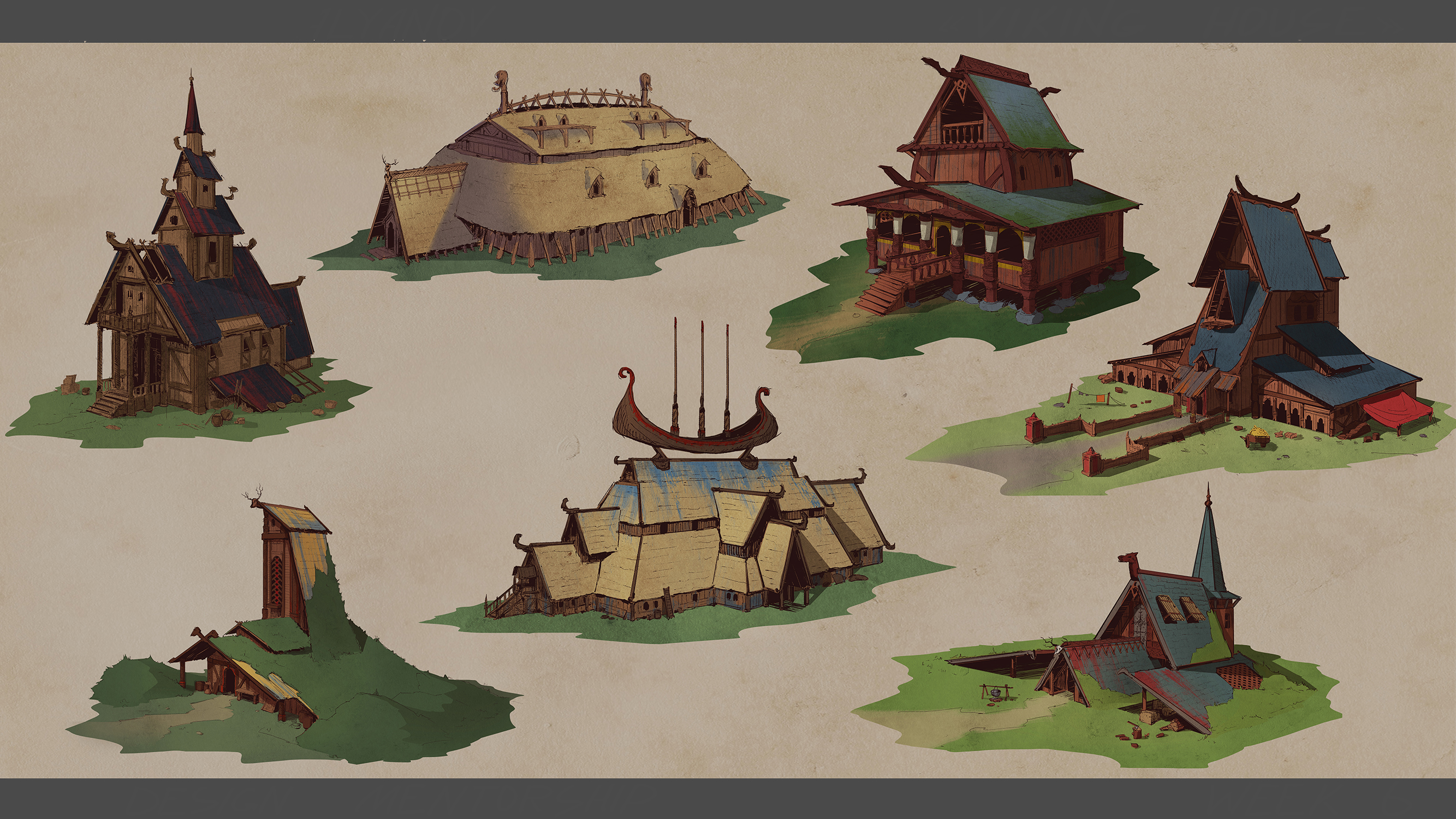
Film concept art is all about the vibe and the camera frame. A prop only needs to look good for three seconds from one specific angle. But in game dev, players will absolutely run around your prop, jump on it, and inspect it in 360 degrees! Because of that, our designs have to be highly functional and make sense from every possible side.
JOINING MAD HEAD GAMES
HE’D BEEN WATCHING US
» What made you want to work at Mad Head Games?
I’ve had you on my radar for a while – I actually played Pagan: Absent Gods back in 2019! Then came Scars Above which was a massive leap forward in quality and complexity. I was really curious to see what kind of challenges the studio would take on next. Plus, knowing Mad Head Games is a part of Saber Interactive (whose games I’ve always been a huge fan of), I was certain their upcoming projects would be epic. Now that I’m on the inside, I can confidently say that our new, unannounced project is an absolute dream for any Concept Artist!
» What were your first impressions of the studio and its culture?
I was really impressed by the HR team’s professionalism right from the interview stage. From day one, they were incredibly fast at helping me with every single question I had (and trust me, there were a lot during onboarding!). They even sorted me out with studio merch by mail right off the bat.
Since I’m not based in Serbia, I can’t hang out in the office, but the team creates such a warm and welcoming vibe in our studio chats that I honestly forget I’m miles away half the time.
» What skills did we look for when hiring you for this role?
Since you needed an environment Concept Artist for an upcoming AAA title, you naturally evaluated my ability to design assets, build locations, and convey a specific mood. But it wasn’t just about technical chops. Soft skills and teamwork were huge factors, because this role involves constant communication across different studio departments, not just our own art team.
THE CRAFT
SOLVING BEFORE STYLING
» What’s your advice for Concept Artists aiming to land a AAA project?
Your portfolio is everything. But there’s a massive misconception out there: chasing ArtStation trends. Creating a stunning illustration that farms thousands of likes is one thing, but showing an Art Director that you can solve actual production problems is another. They don’t just want pretty pictures.
My advice? Don’t only focus on hyper-detailed, polished final renders. Show your thought process! Include rough sketches, break down how specific parts function, and reveal your actual workflow. At the end of the day, leads aren’t evaluating your social media popularity – they’re looking at how your skills will directly benefit their project.
» Does a modern Concept Artist still need to know how to draw by hand?
If you had asked me this 5-7 years ago, I would have said absolutely yes. But today, there are so many tools that speed up the workflow. You can quickly block out a scene in 3D, slap on some quick textures, set up the lighting, and get a fairly realistic render in no time.
Blender 3D, for example, has become an absolute standard for Concept Artists, along with its massive ecosystem of plugins. Plus, there are countless asset and material libraries available online. Because of all this, I’ve noticed that Concept Artists are spending less and less time actually drawing by hand.
That being said, traditional drawing skills are still a massive advantage. When you combine them with modern 3D tools, being able to paint and sketch by hand speeds up the process incredibly. So, I definitely wouldn’t recommend ignoring that fundamental skill!
» What about AI tools in your pipeline? Do you use them, and how much do they actually help?
Over the last couple of years, AI tools have taken a massive leap forward in terms of render quality and detailing. I’ve experimented with most of them – from Midjourney and Nano Banana 2 to running local models on ComfyUI. I know that a lot of mobile game studios have already heavily integrated AI into their pipelines. But when it comes to concept art for AAA games? Honestly, AI tools practically don’t help me at all.
Sure, they can be handy for exploring the mood of a shot or rendering out an illustration, but they simply cannot create meaningful, functional design. People might argue with me, saying that AI can already generate incredibly creative, photorealistic stuff. And in a vacuum – away from a real project – yes, it can.
But a Concept Artist’s actual job is to create a design that is logical, functional, and perfectly fits the specific world of the game. And on top of that, you have to be able to precisely implement the Art Director’s feedback and revisions. That level of control and deliberate design is exactly where AI still struggles.
REMOTE WORK
MILES AWAY, NEVER FAR
» What is it like to work remotely for a studio based in Serbia?
A large part of my team is actually scattered across different cities outside of Serbia, so at first, it was easy to feel a little disconnected. But we fix that with regular syncs where we don’t just talk shop. We share experiences, bounce questions off each other, and, honestly, just chat about life.
The coolest part, though, is that Mad Head Games doesn’t keep things 100% virtual – there’s real effort to bridge the distance and make in-person connection happen when possible.
» How would you describe the Art team at Mad Head Games?
It’s definitely a team of top-tier professionals from all corners of Europe – we even have an artist from South Africa! Everyone has their own unique strengths. Some are incredibly fast and skilled in 3D, others are amazing at hand-drawing, and some are absolute masters of photobashing.
But the best part is that we’re constantly connected. If anyone hits a wall or struggles with a task, they can always reach out and ask for advice or a helping hand.
PERSONAL REFLECTION
LOOKING BACK TO LOOK FORWARD
» Looking back at the version of yourself who was still designing railway equipment, what would surprise him most about where you ended up?
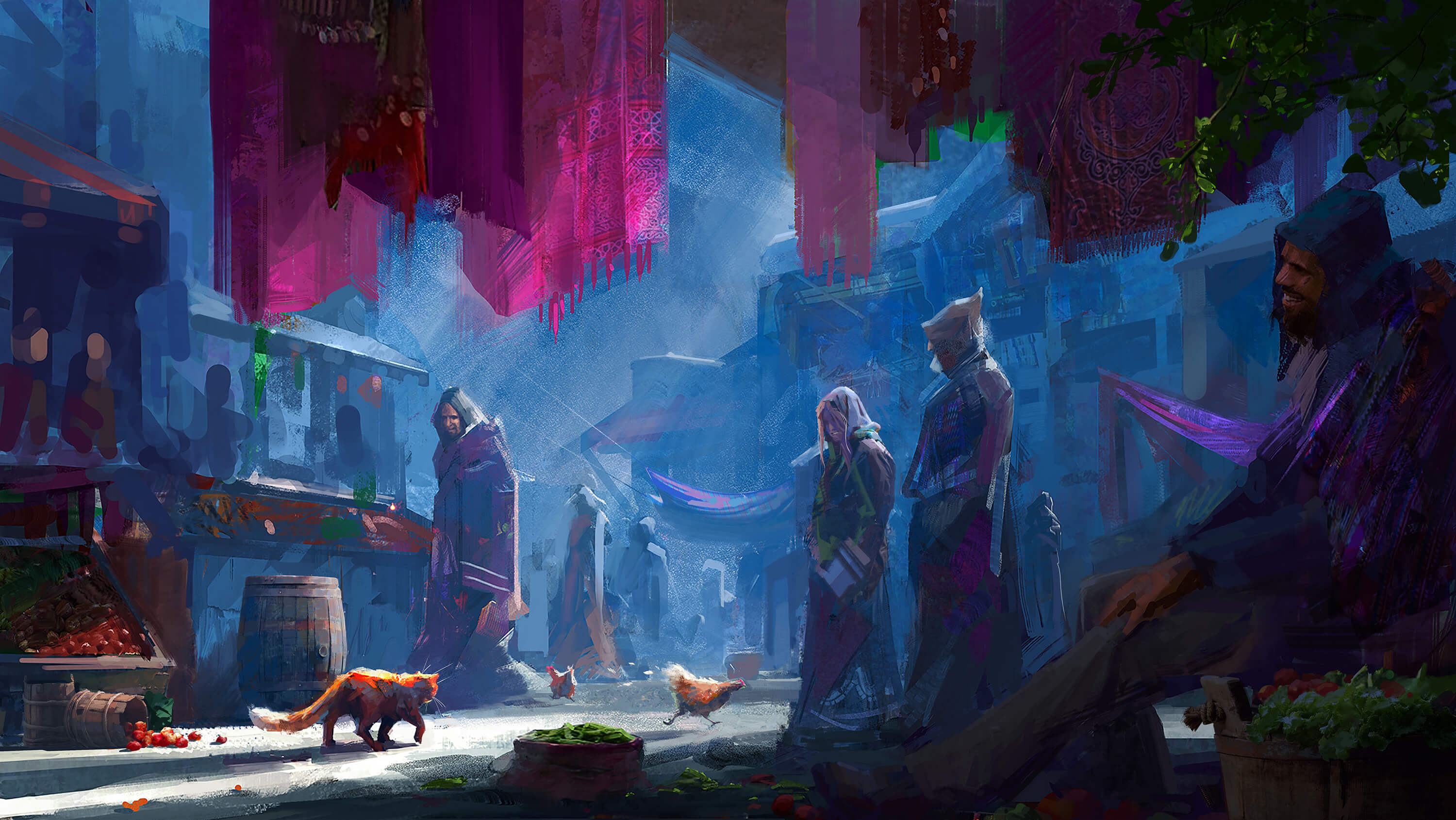
Honestly, back then, I couldn’t have even imagined that life would take me from dry calculations and blueprints to building entire worlds. At the time, I didn’t even know the profession of “concept artist” existed!
» After everything – railways, cinematics, mobile games, and now AAA – what does “good concept art” mean to you today?
To me, “good concept art” is, first and foremost, problem-solving. It’s not just a pretty picture. Good concept art provides clear answers for the rest of the production team. If a 3D modeler looks at your design and instantly understands how the object is put together, how it moves, and what materials it’s made of – that is good concept art. It’s about creating something that is visually striking, but completely grounded in the logic and functionality of the game world.
BLOG
You too canbecome a hero
- We’re looking to add more superpowers to our team, so... are you up to that task?
- Check out our careers page for open positions.
- If there's nothing that suits your skills now, there may well be soon!